Bean-to-Bar Chocolate Manufactory
At feyn, the focus is on quality and the unique character of each chocolate bar.
Bean-to-bar production means that the entire chocolate-making process, from cocoa bean to finished bar, takes place in our manufactory in Berlin and is carefully controlled. This ensures that the different aromas of cocoa beans from various growing regions can develop to their full potential in our bars.
This is what sets feyn Chocolates apart from industrially produced chocolates, which are usually more interested in a consistent flavour profile that appeals to the broadest possible audience.
1. Selecting
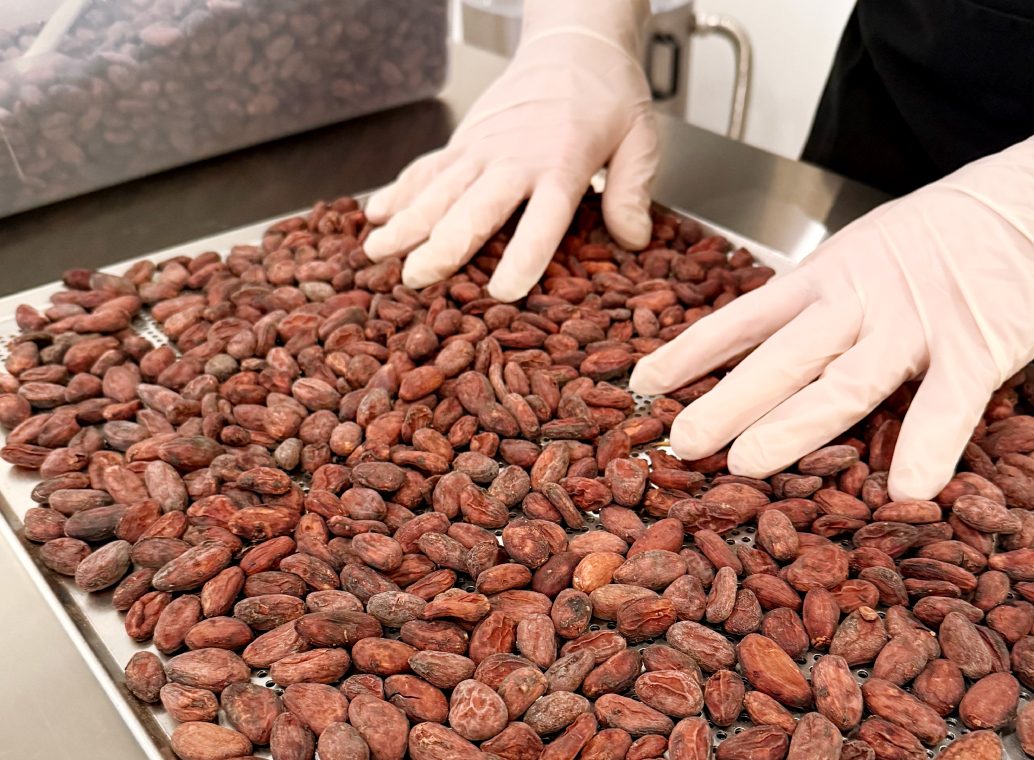
Careful selection of cocoa beans in the bean-to-bar process is essential to produce a high-quality chocolate with a distinctive flavour.
We place particular emphasis on selecting cocoa beans from regions with different aroma profiles. We use only high-quality organic cocoa beans from smallholder farmers, which we also hand-sort before roasting.
2. Roasting
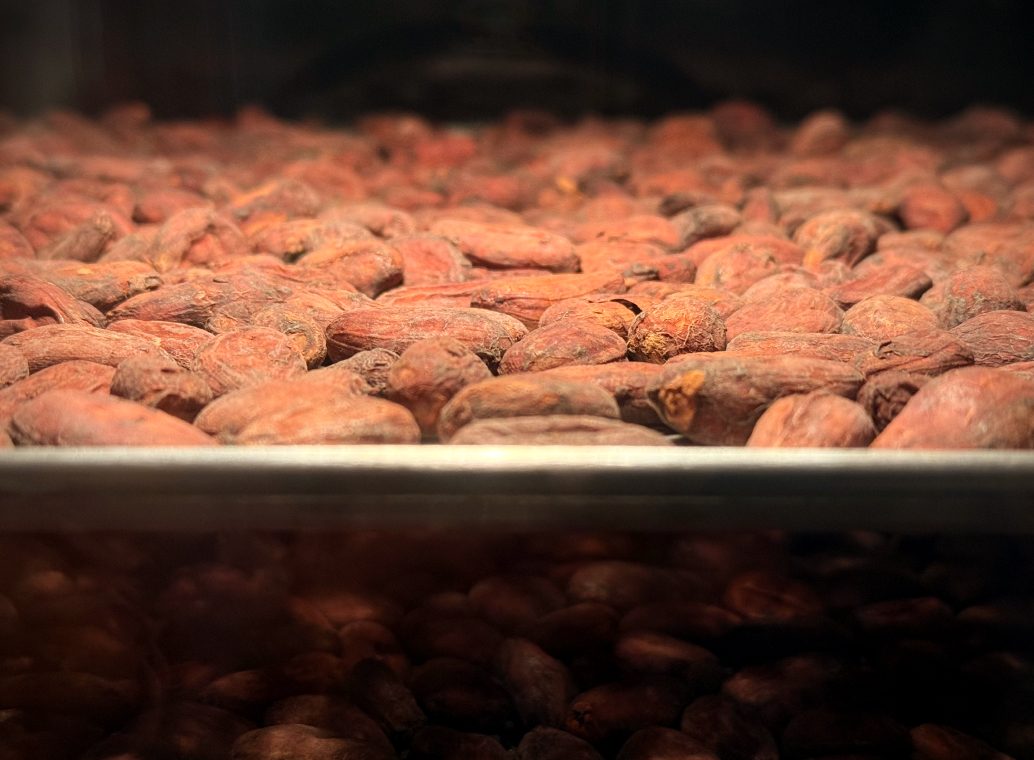
Roasting the cocoa beans is crucial for developing the chocolate’s flavour profile. Roasting develops and intensifies the complex aromas of the cocoa beans. At the same time, bitter and acidic notes are reduced.
For each batch of cocoa beans, we thoroughly test different roasting profiles until we find the ideal one that reduces unpleasant aromas and achieves a balanced flavour composition.
3. Separating
Next, the cocoa bean must be separated from its shell, as the shells contain bitter compounds and unwanted aromas and lead to an unpleasant texture in the chocolate.
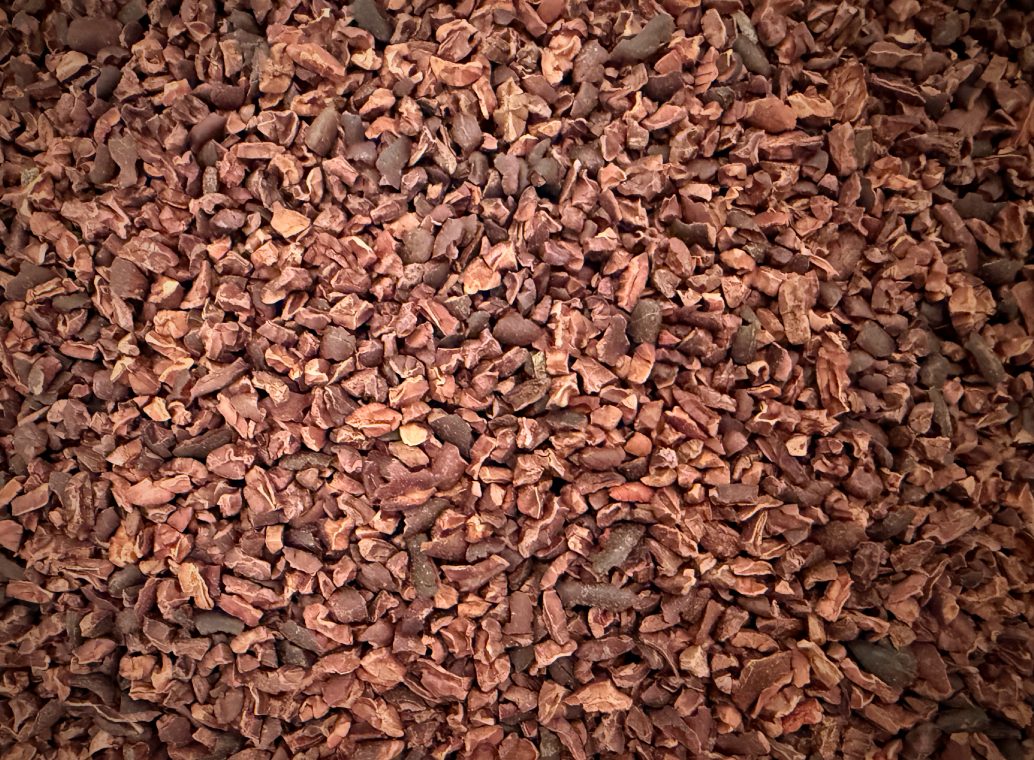
The roasted beans are cracked, which already separates the skin from the edible parts of the cocoa beans, the cocoa nibs. The light skins are then blown away from the cocoa nibs using an air stream.
4. Grinding and Conching
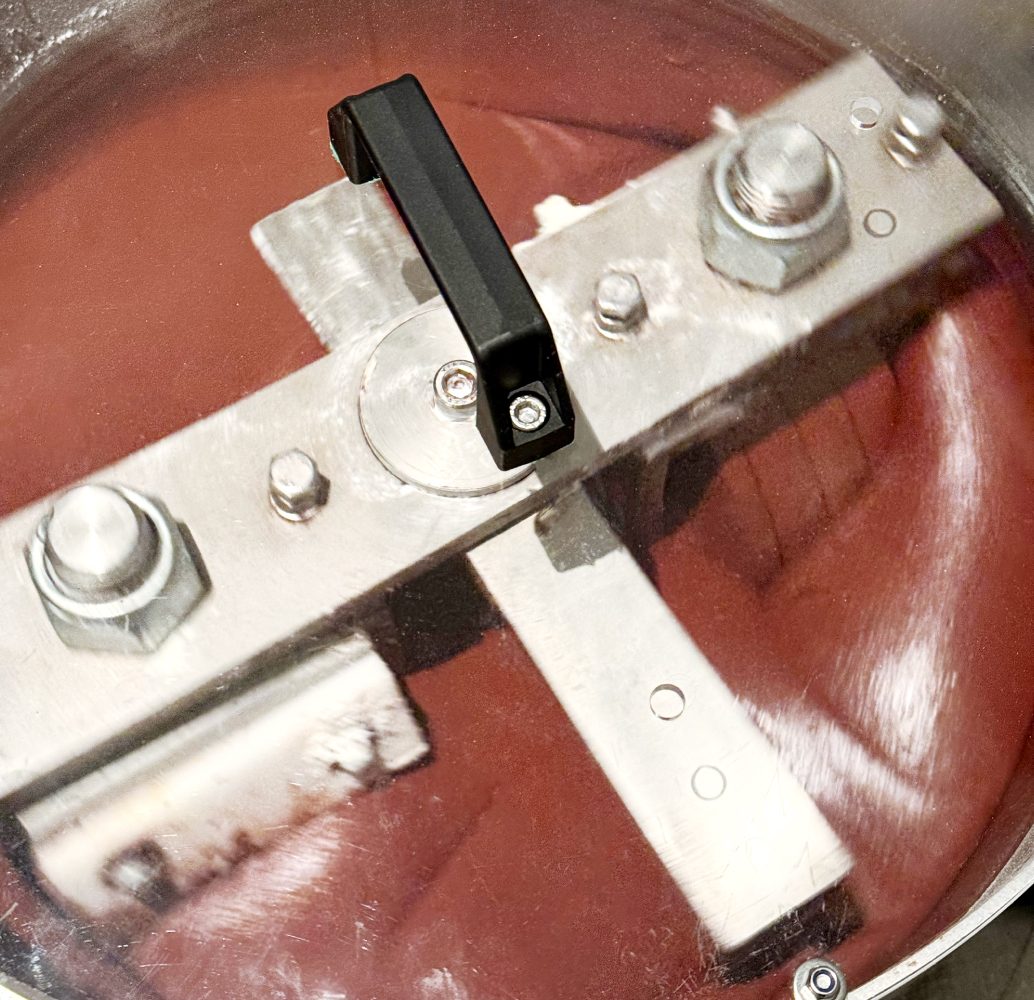
Grinding and conching the cocoa nibs in the melangeur, like roasting, is an essential step in the bean-to-bar process that has a decisive influence on the chocolate’s flavour profile.
We grind the roasted cocoa nibs for at least three days in a granite stone mill—the melangeur—adding sugar and, if applicable, cocoa butter and whole milk powder, until a smooth, creamy cocoa mass is formed. Over this long period, the chocolate is also conched: the aromas of the beans are released and continue to develop. At the same time, acids and bitter compounds are reduced.
We leave the chocolate in the melangeur until the optimal flavour profile is achieved—even if it takes 3 or 4 days.
5. Tempering and Moulding
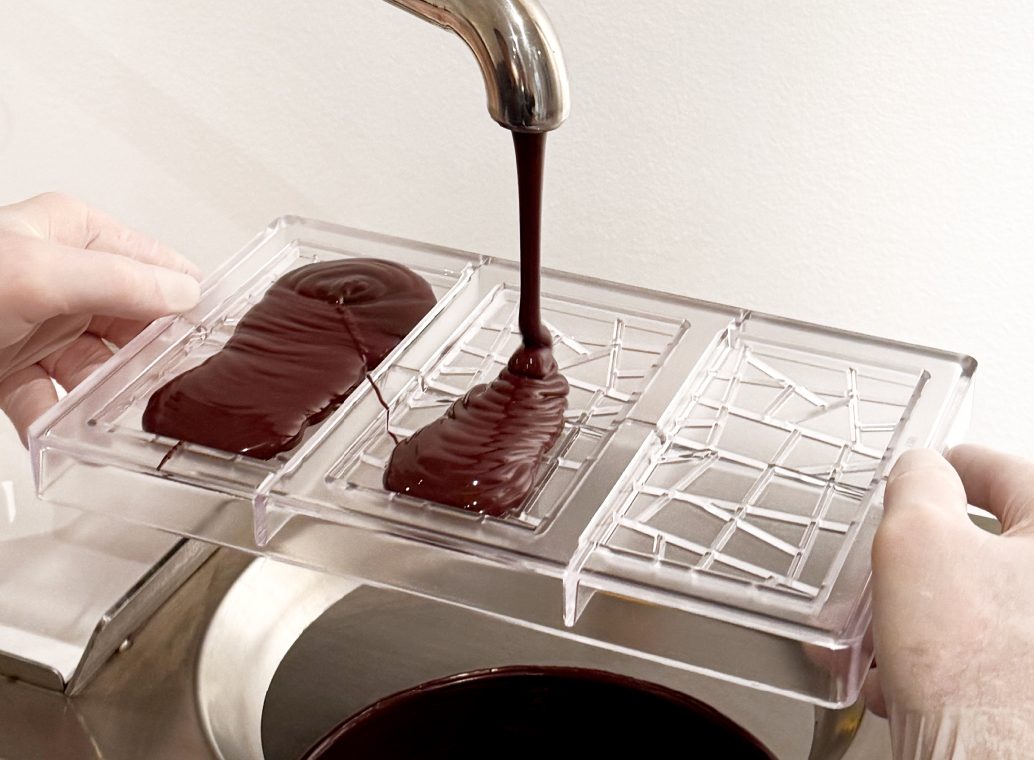
For chocolate to develop a glossy surface, break with the typical “snap” sound, and have a pleasant mouthfeel with a creamy melt, it must be properly tempered before it is poured into bar moulds.
During tempering, the chocolate is heated to specific temperatures and then cooled again to promote the formation of the stable “Form V crystal” of cocoa butter. This ensures that the chocolate not only looks and tastes good, but also has the desired texture and stability.
6. Toppings
At feyn, we are convinced that our chocolates taste excellent on their own.
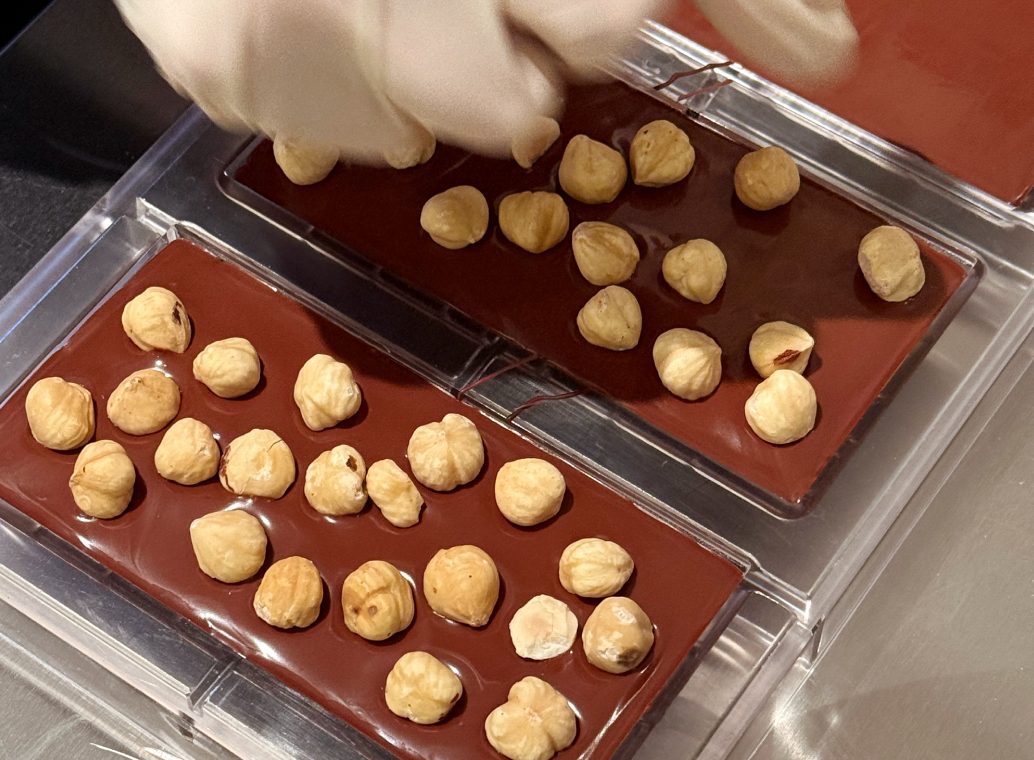
However, there are certain toppings that create an ideal symbiosis with the chocolate’s flavour notes. A classic is crunchy roasted hazelnuts, which harmonise perfectly, or the delicate acidity of raspberries, which provides a refreshing contrast.
That is why we also offer our chocolates with toppings when they can harmoniously enhance the taste experience or enrich it in a new & exciting way.
7. Packaging
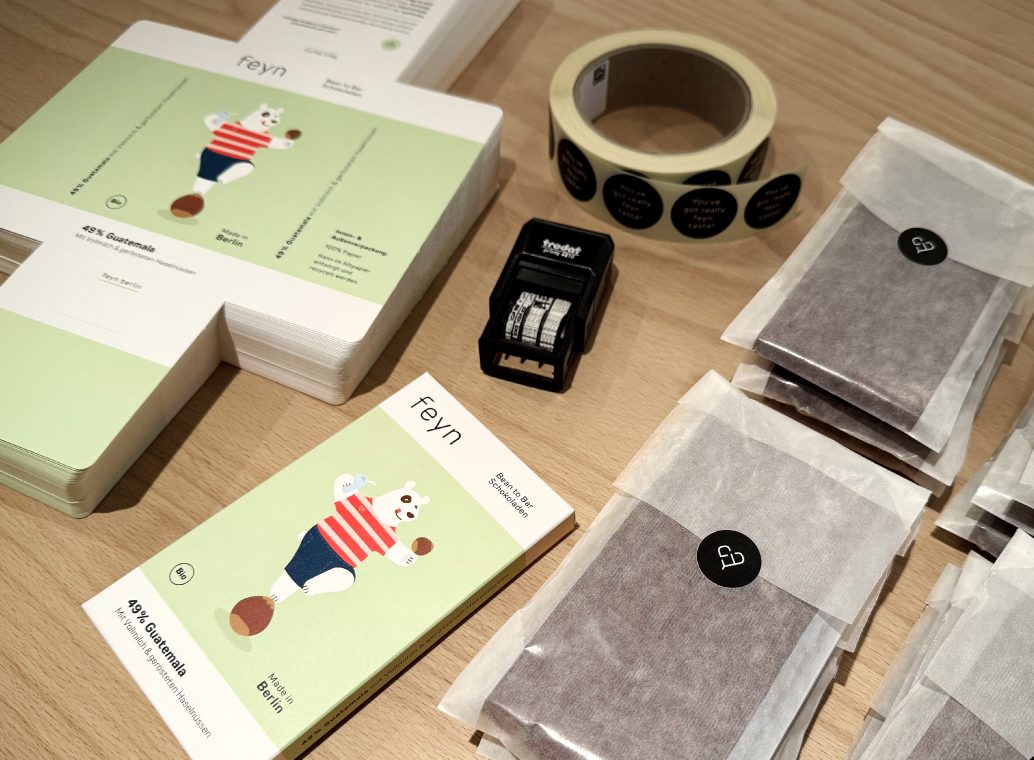
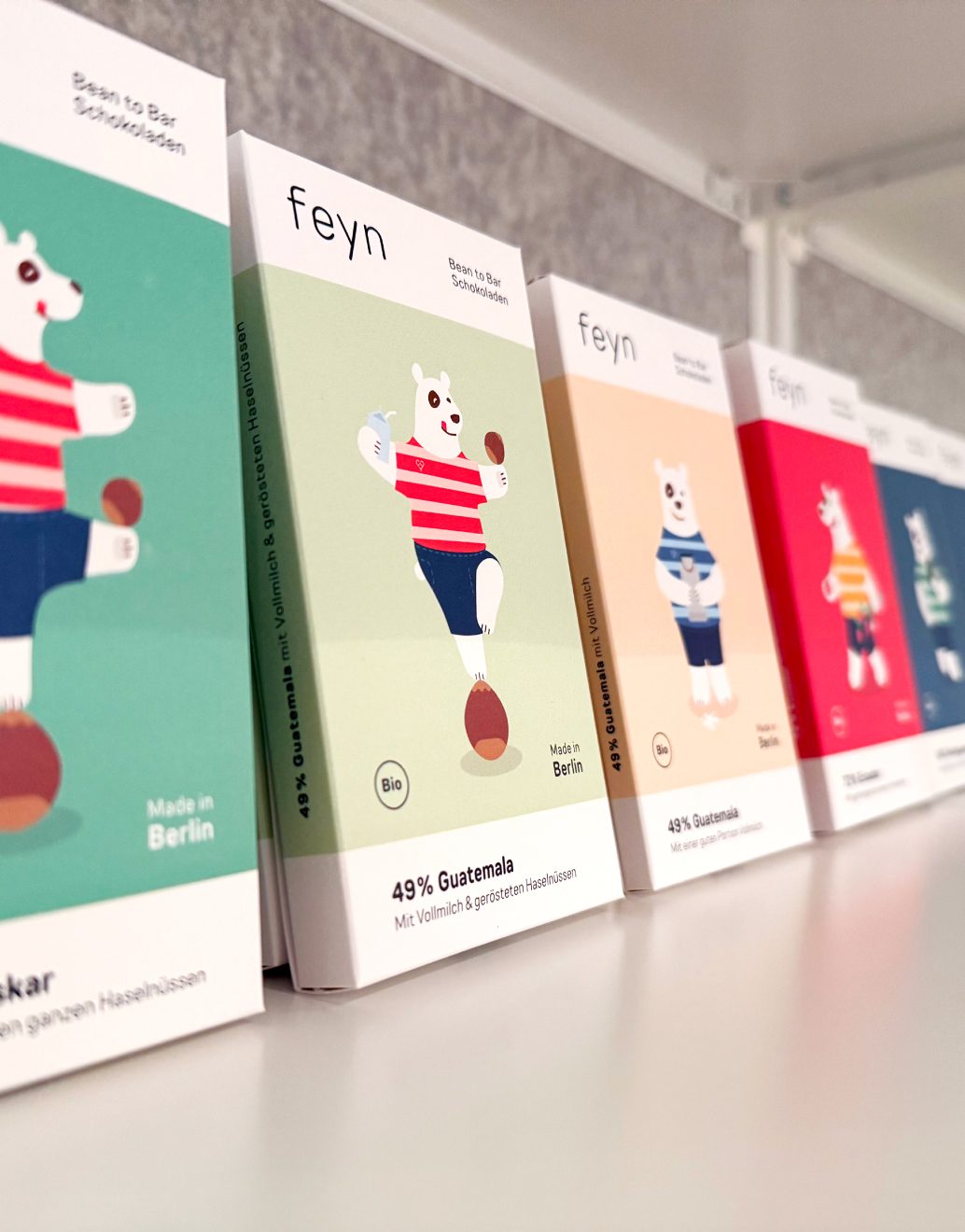
Our chocolate comes in environmentally friendly packaging that is completely plastic-free and can be recycled with paper waste. We place great value on ensuring that our packaging is not only sustainable, but also visually appealing and designed with attention to detail.
Quite apart from that, we hope that even our packaging will put a smile on your face and lift your spirits.